
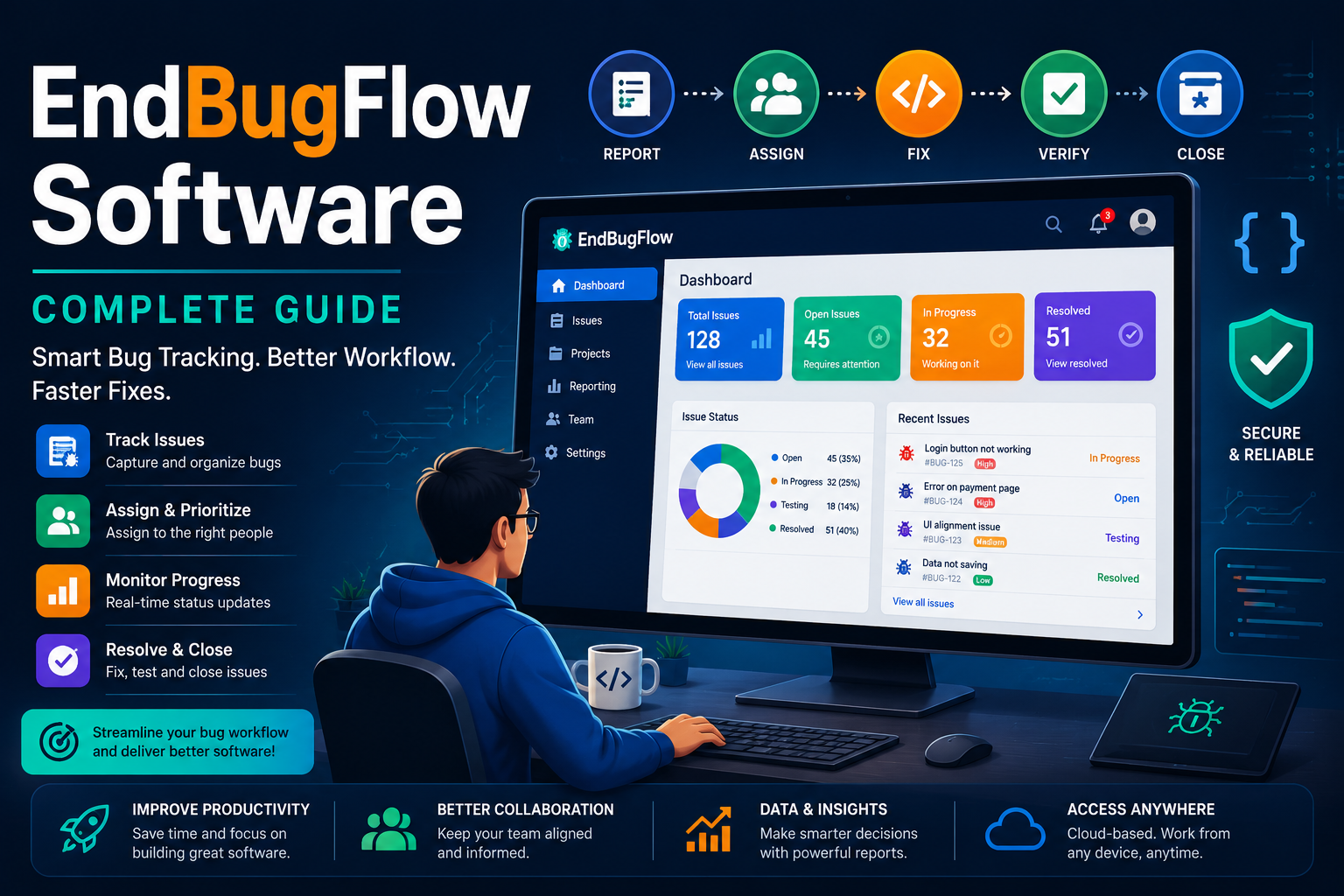

If you’ve searched for “EndBugFlow Software,” you’re probably trying to understand what it does and whether it’s worth your attention. The straightforward answer is that there is currently very little publicly verified information about a software product officially called EndBugFlow. There is no widely recognized documentation or official product page that clearly explains its features or intended use.
However, the name itself provides some clues. It suggests a connection with bug tracking, issue management, or software development workflows. Many software teams rely on tools that help identify, organize, prioritize, and resolve bugs before applications are released.
In this guide, we’ll look at what EndBugFlow Software may represent, explain how bug management software typically works, and share practical advice for evaluating unfamiliar software before using it.
Understanding the Name EndBugFlow
Software names often hint at their purpose.
Breaking the name into parts gives us:
- End – possibly referring to resolving or closing issues.
- Bug – software defects, errors, or unexpected behavior.
- Flow – the workflow used to track and manage those issues.
While this interpretation seems reasonable, it’s important to remember that there is no publicly verified documentation confirming that this is the official purpose of EndBugFlow Software.
Why Bug Tracking Software Matters
Every software project encounters bugs at some stage.
These bugs can range from small interface problems to serious security vulnerabilities. Without an organized system, developers may struggle to prioritize and fix issues efficiently.
Bug management software helps development teams:
- Record reported problems
- Assign issues to developers
- Monitor progress
- Test fixes
- Close completed tasks
Even small software projects benefit from having a structured workflow.
How Bug Management Software Typically Works
Although we can’t confirm the exact behavior of EndBugFlow Software, most bug tracking systems follow a similar process.
Reporting an Issue
A tester, customer, or developer identifies a problem and submits a report.
The report often includes:
- Description
- Steps to reproduce
- Screenshots
- Device information
- Software version
The more details included, the easier it becomes to solve the issue.
Assigning the Bug
Project managers or team leads assign the issue to an appropriate developer.
Some organizations automatically assign bugs based on expertise or workload.
Investigating the Problem
The developer analyzes the issue, identifies its cause, and begins working on a solution.
This stage may involve reviewing code, testing different scenarios, or reproducing the reported error.
Testing the Fix
Once the issue has been resolved, quality assurance testers verify that the fix works correctly.
Only after successful testing is the issue marked as complete.
Features Users Often Expect
When evaluating any bug tracking application, people usually look for several core features.
Issue Dashboard
A centralized dashboard helps teams monitor all active tasks.
Search and Filters
Finding specific issues quickly becomes much easier with search and filtering tools.
Status Tracking
Most systems organize bugs into stages such as:
- Open
- Assigned
- In Progress
- Testing
- Resolved
- Closed
Team Collaboration
Developers and testers often communicate directly within issue reports.
Notifications
Automatic alerts keep team members informed whenever an issue changes status.
These features improve communication and reduce delays.
Who Might Use Software Like EndBugFlow?
If EndBugFlow is indeed a bug management application, it could be useful for:
- Software developers
- QA testers
- Project managers
- Technical support teams
- Product owners
Each group contributes to identifying, prioritizing, and resolving software issues.
Benefits of Organized Bug Tracking
I’ve worked on projects where issues were tracked using spreadsheets instead of dedicated software. It quickly became difficult to know who was responsible for each task or whether a problem had already been fixed.
A structured bug tracking system can provide several advantages:
Better Organization
Every issue is stored in one place.
Faster Resolution
Developers spend less time searching for information.
Improved Team Communication
Everyone can see updates in real time.
Clear Priorities
Critical bugs receive attention before less important ones.
These improvements often lead to more reliable software.
How to Evaluate Unfamiliar Software
Since publicly verified information about EndBugFlow is limited, it’s wise to evaluate it carefully before installation.
Consider the following:
Check the Developer
Look for information about the company or organization behind the software.
Verify the Download Source
Only install software from trusted websites.
Read Available Documentation
User guides and installation instructions often reveal how mature a product is.
Look for Reviews
Independent feedback can provide useful insights into stability and usability.
Test in a Safe Environment
If possible, try unfamiliar software on a non-production system before using it for important work.
Security Considerations
Whenever you install new software, security should be a priority.
Good practices include:
- Scanning downloaded files
- Keeping antivirus software updated
- Installing security updates
- Using trusted download sources
- Backing up important data
These habits reduce unnecessary risks regardless of the software you’re using.
Could EndBugFlow Continue Growing?
It’s certainly possible.
Many successful software tools began as small internal projects before becoming widely adopted.
If EndBugFlow continues to receive development, documentation, and community support, it could attract a larger audience over time.
Ultimately, long-term success depends on factors such as:
- Reliability
- Ease of use
- Regular updates
- Helpful documentation
- Responsive customer support
Conclusion
While EndBugFlow Software is not currently supported by extensive publicly verified documentation, its name suggests a connection to bug tracking and software development workflows. Although we cannot confirm its exact functionality, understanding how bug management software generally works provides valuable context for anyone researching the topic.
Before installing or adopting any unfamiliar software, verify its source, review available documentation, and evaluate its security. Taking a cautious approach helps you make informed decisions while protecting your systems and data.
If you found this article informative, feel free to check out our other articles as well.
FAQs
What is EndBugFlow Software?
Publicly verified information is limited. Based on its name, it may be related to bug tracking or software development workflows, but its exact purpose has not been officially documented.
Is EndBugFlow a bug tracking tool?
It may be, but there is no confirmed public documentation verifying its functionality.
Who would use software like EndBugFlow?
If it is a bug management tool, potential users include developers, QA testers, project managers, and software support teams.
How can I determine if EndBugFlow is safe?
Download it only from trusted sources, review available documentation, and scan installation files with security software before use.
Why is bug tracking important?
Bug tracking helps development teams organize issues, improve collaboration, prioritize fixes, and deliver more reliable software.