
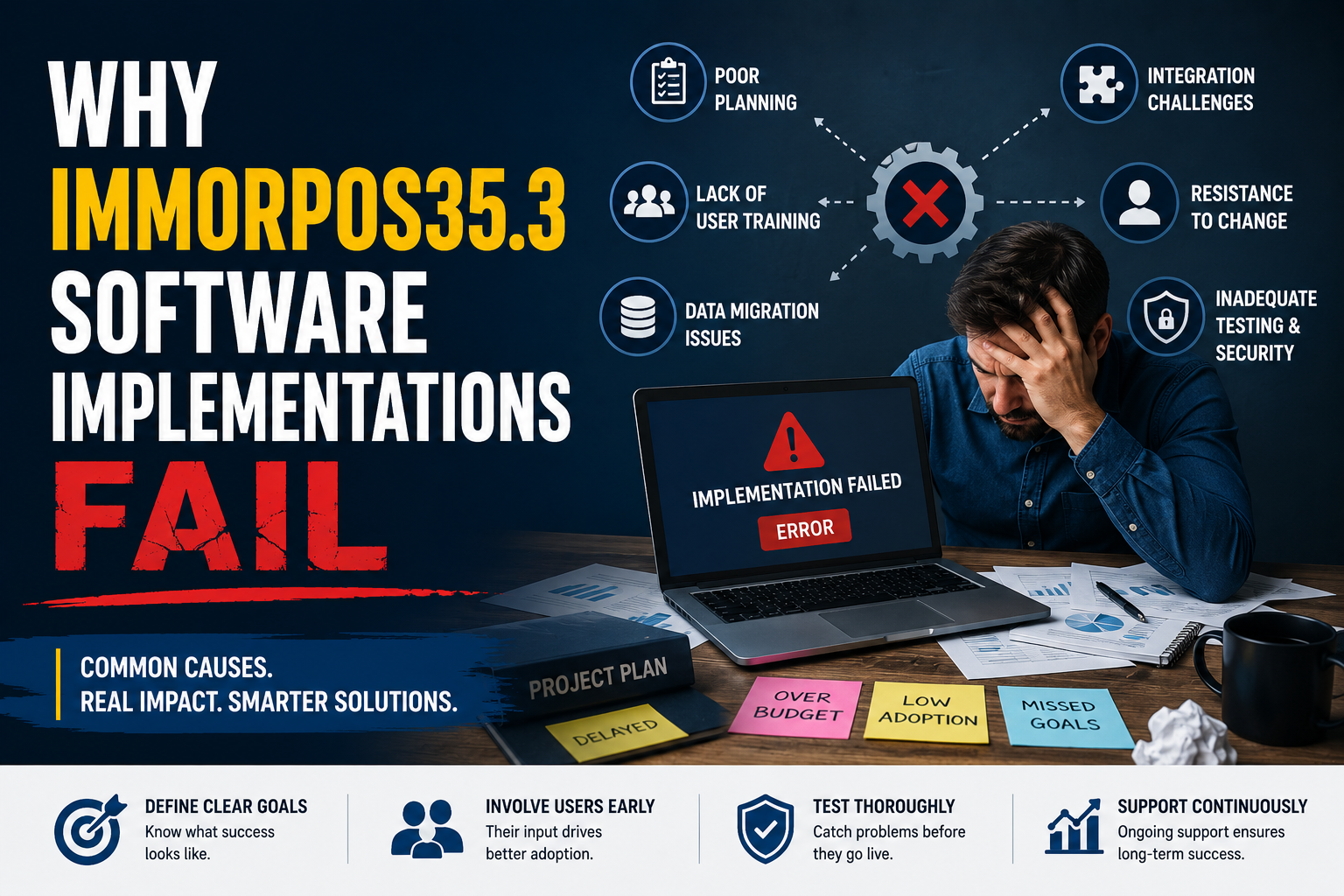

If you’ve searched for “Why Immorpos35.3 Software Implementations Fail,” you’re probably trying to understand why some software deployments don’t go as planned. The short answer is that there is very little publicly verified information about Immorpos35.3 Software itself, so it’s not possible to confirm specific implementation issues related to that product.
However, software implementation challenges are well understood across the technology industry. Whether you’re deploying a business application, an enterprise platform, or a custom internal tool, the same obstacles tend to appear repeatedly.
In this guide, we’ll explore the most common reasons software implementations fail and explain how these lessons could apply to software like Immorpos35.3. If you’re preparing for a deployment or trying to improve an existing system, these best practices can help you avoid costly mistakes.
Understanding Software Implementation
Software implementation involves much more than installing an application.
A successful implementation usually includes:
- Planning the project
- Configuring the software
- Migrating existing data
- Training users
- Testing the system
- Monitoring performance after launch
Many organizations focus heavily on installation but underestimate the importance of the other steps.
Lack of Clear Project Goals
One of the biggest reasons software projects struggle is the absence of well-defined objectives.
Before implementation begins, teams should answer questions such as:
- What problem will the software solve?
- Who will use it?
- How will success be measured?
- What business processes will change?
Without clear answers, projects often lose direction.
I’ve seen organizations purchase software expecting it to solve every operational issue, only to realize later that nobody agreed on what success actually looked like.
Poor Planning Before Deployment
Planning is often overlooked because teams are eager to begin using new software.
Unfortunately, rushing into implementation can lead to:
- Delays
- Budget overruns
- Missed deadlines
- Unexpected technical issues
A structured implementation plan should include:
- Timeline
- Budget
- Team responsibilities
- Risk assessment
- Backup strategy
Even small projects benefit from careful preparation.
Inadequate User Training
Software is only effective if people know how to use it.
Many implementation failures occur because users receive little or no training before launch.
Good training should cover:
- Basic navigation
- Daily workflows
- Common troubleshooting
- Security practices
- Frequently used features
When employees feel comfortable using new software, adoption becomes much smoother.
Resistance to Change
People naturally become comfortable with familiar tools.
Introducing new software often changes established routines, and some employees may resist these changes.
Common concerns include:
- Fear of making mistakes
- Increased workload during transition
- Uncertainty about new processes
Open communication and gradual training can reduce resistance significantly.
Data Migration Problems
Moving data from one system to another is one of the most challenging parts of implementation.
Potential issues include:
- Missing records
- Duplicate entries
- Incorrect formatting
- Corrupted files
- Inconsistent information
Before migrating important data, organizations should:
- Create backups
- Clean outdated records
- Test the migration process
- Verify the results
Accurate data is essential for successful software adoption.
Integration Challenges
Most businesses rely on multiple software applications.
New software often needs to communicate with:
- Accounting systems
- Customer databases
- Inventory platforms
- Email services
- Reporting tools
If these integrations fail, daily operations may become less efficient instead of more productive.
Testing every connection before launch helps identify compatibility issues early.
Insufficient Testing
Testing isn’t just about checking whether software opens correctly.
A complete testing process should evaluate:
- Functionality
- Performance
- Security
- User permissions
- Data accuracy
- System compatibility
Skipping these tests increases the risk of discovering serious problems after deployment.
Weak Project Management
Successful implementations usually involve multiple teams.
Without effective project management, tasks may be duplicated, delayed, or forgotten entirely.
A project manager typically helps coordinate:
- Timelines
- Team communication
- Resource allocation
- Risk management
- Progress tracking
Even smaller software projects benefit from clear leadership.
Ignoring Security Considerations
Security should never be an afterthought.
Organizations implementing unfamiliar software should verify:
- User access controls
- Password policies
- Data encryption
- Backup procedures
- Software update processes
Protecting sensitive information is just as important as installing the software itself.
Lack of Ongoing Support
Implementation doesn’t end once the software goes live.
Users may continue encountering:
- Technical questions
- Configuration issues
- Feature requests
- Software updates
Providing ongoing support helps users remain productive while improving confidence in the new system.
Could These Challenges Apply to Immorpos35.3 Software?
Since publicly verified information about Immorpos35.3 Software is limited, it isn’t possible to confirm whether any specific implementation failures have occurred.
However, if Immorpos35.3 is a proprietary or business-focused application, the same implementation principles discussed in this article would likely apply.
Regardless of the software involved, careful planning, user training, testing, and ongoing support remain essential.
Best Practices for Successful Software Implementation
Organizations can improve their chances of success by following several proven practices.
Define Clear Objectives
Know exactly what the software should accomplish before implementation begins.
Build a Realistic Timeline
Avoid rushing important phases such as testing and training.
Involve End Users
Gather feedback from the people who will actually use the software every day.
Test Before Launch
Pilot testing can reveal problems before they affect the entire organization.
Document Procedures
Written instructions help users solve common issues independently.
Review Performance Regularly
After implementation, evaluate whether the software is meeting its original goals.
Final Thoughts
While there is limited verified public information about Immorpos35.3 Software, the reasons software implementations fail are well documented across the technology industry. Poor planning, unclear objectives, inadequate training, weak project management, and insufficient testing consistently rank among the leading causes of unsuccessful deployments.
Whether you’re evaluating Immorpos35.3 or any other software solution, taking a structured and thoughtful approach greatly improves your chances of success. Good preparation, open communication, and ongoing support are often the difference between a smooth implementation and a frustrating experience.
If you found this article informative, feel free to check out our other articles as well.
FAQs
Why do software implementations fail?
Common reasons include poor planning, unclear requirements, inadequate training, data migration issues, and insufficient testing.
Is Immorpos35.3 Software known for implementation problems?
There is currently limited publicly verified information about Immorpos35.3 Software, so no specific implementation issues can be confirmed.
How can businesses improve software implementation success?
Planning carefully, involving users early, providing training, testing thoroughly, and monitoring performance after launch can significantly improve outcomes.
Why is user training important?
Training helps employees understand new workflows, reduces errors, and increases confidence when using unfamiliar software.
Should every software implementation include testing?
Yes. Testing helps identify compatibility issues, performance problems, security concerns, and data errors before the software is fully deployed.